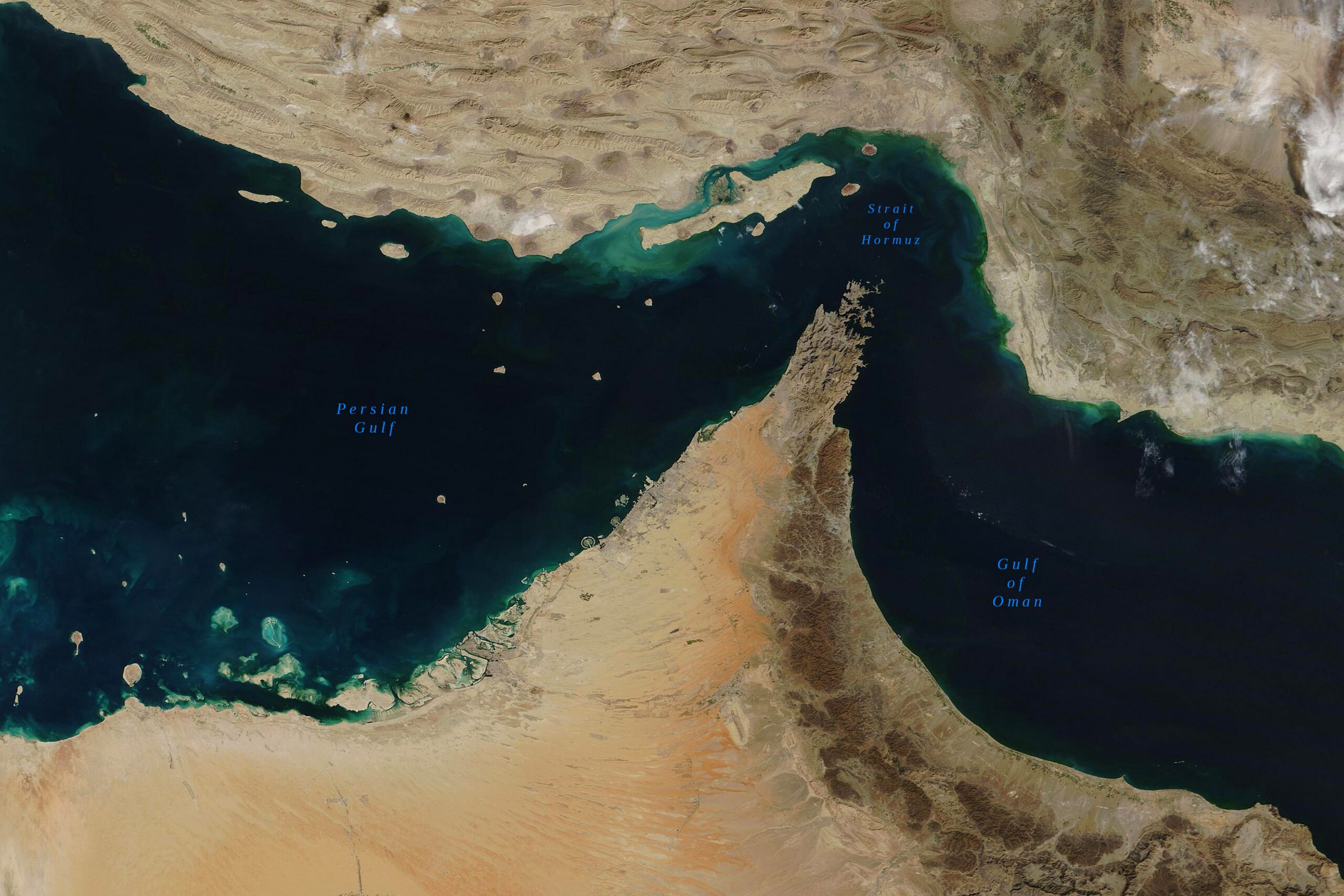
Polymarket and Kalshi are both running a ladder of contracts on the same question: when does shipping through the Strait of Hormuz return to “normal”? It is one of the cleanest cross-platform comparisons we track — and one of the most surprising, because the two venues define normal identically yet price the recovery very differently.
Where things stand (as of 2026-07-12). The 2026 US–Iran conflict effectively closed the strait from late February. Per IMF PortWatch, the 7-day average of transit calls stands at 16.43 — about 17% of the ~94/day norm, still well below the 60 "normal" line these contracts settle on. A June 17 US–Iran memorandum reopened the waterway on paper — no transit tolls, Iranian mines to be cleared within 30 days — but flow has been fragile, with shipping ticking up and then stalling after a vessel was struck in the days that followed.
Both contracts anchor to the exact same measure: the 7-day moving average of transit calls through the strait, as published by IMF PortWatch, reaching 60. (Kalshi’s contract says “above 60”; Polymarket’s says “equal to or above 60” — a one-vessel hair’s-breadth that almost never matters.) Two things make that threshold worth understanding. First, 60 is not the pre-crisis baseline — normal runs ~90–100 ships a day, so the markets treat about two-thirds of normal as “returned to normal.” Second, both resolve the instant the average first touches 60 — a one-touch barrier. They aren’t asking whether traffic is sustainably normal; they’re asking when it first recovers to 60, even for a day. From a handful of transits today, that is roughly a twelve-fold climb.
Here is the surprise: with an identical definition, an identical data source, and the same one-touch mechanic, the two crowds have largely converged; the gap that once separated them has narrowed:
| Normal by… | Polymarket | Kalshi | Gap |
|---|---|---|---|
| Apr 15, 2026 | — | 0% | — |
| Jul 15, 2026 | 0% | 1% | -1 |
| Jul 31, 2026 | 2% | — | — |
| Aug 1, 2026 | — | 1% | — |
| Aug 15, 2026 | — | 3% | — |
| Aug 31, 2026 | 14% | — | — |
| Sep 1, 2026 | — | 10% | — |
Any divergence here is not a settlement-window artifact and not a definitional gap — both are ruled out above. When present, it reflects a genuine difference between two trader populations: Polymarket’s global, crypto-native base, versus Kalshi’s US-regulated market, which has been the cautious voice throughout — its traders were pricing “not until August or later” back in May.
The two ladders also differ in wording: Polymarket lists “by July 15,” Kalshi “Before Jul 15, 2026,” and Kalshi’s contracts settle about a week past their stated deadline. These boundary details — inclusive vs exclusive dates, ≥ vs >, settlement lag — genuinely nudge which contract is “cheaper” on the margin. But here they are a sideshow: worth at most a point or two, nowhere near the double-digit gaps above. The headline divergence is conviction, not contract text.
Sources: IMF PortWatch (transit data) · 2026 Strait of Hormuz crisis · CNBC: Kalshi traders on the timeline. Odds update live; underlying transit figures are as of July 1, 2026.
| Outcome | Spread | ||
|---|---|---|---|
B Before Jul 1, 2027 | - | - | |
B Before Apr 1, 2027 | - | - | |
S Strait of Hormuz traffic returns to normal by December 31? | - | - | |
B Before Jan 1, 2027 | - | - | |
B Before Dec 1, 2026 | - | - | |
B Before Nov 1, 2026 | - | - | |
S Strait of Hormuz traffic returns to normal by September 30? | - | - | |
B Before Oct 1, 2026 | - | - | |
S Strait of Hormuz traffic returns to normal by August 31? | - | - | |
B Before Sep 1, 2026 | - | - | |
B Before Aug 15, 2026 | - | - | |
S Strait of Hormuz traffic returns to normal by July 31? | - | - | |
B Before Jul 15, 2026 | - | - | |
B Before Aug 1, 2026 | - | - | |
B Before Apr 15, 2026 | - | - | |
S Strait of Hormuz traffic returns to normal by July 15? | - | - |
Background, methodology, and platform context
Compare Strait of Hormuz Traffic Returns to Normal prediction market odds side by side across Polymarket, Kalshi. Platforms show similar odds, with an average spread of just 0.0pp. Close agreement often signals strong market consensus. With $50.70M in combined trading volume across 16 outcomes, this is one of the most actively traded cross-platform prediction markets.
Descriptions normalized for comparison (outcome names replaced with [OUTCOME])
This market will resolve to “Yes” if IMF Portwatch publishes a 7-day moving average of transit calls (“Arrivals of Ships”) for the Strait of Hormuz equal to or above 60 for any date between market creation and September 30, 2026. Otherwise, this market will resolve to “No”. Daily transit calls include container, dry bulk, roll-on/roll-off, general cargo, and tanker ships. Ships not reported by IMF Portwatch will not be considered. This market will resolve as soon as IMF Portwatch publishes a 7-day moving average of transit calls equal to or above the specified level, or once data has been published for the final date in the specified period and no such value has been published. If no data has been published for the final date of the specified period within 14 calendar days (ET) after the end of that period, this market will resolve based on data published up to that point. Revisions to previously published data points made within this market’s timeframe will be considered. However, they will not disqualify a previously published data point from qualifying. Revisions to previously published data points after data is published for September 30, 2026, however, will not be considered. In case of obvious data integrity issues (i.e., erroneous data), the market may remain open until the end of the third calendar day (ET) after the date on which such data is first released to allow for corrections. Data integrity issues refer only to clerical or other similar errors in the underlying data, and do not include cases where IMF Portwatch differs from alternative sources. The resolution source for this market will be IMF Portwatch, specifically the transit calls data published for the Strait of Hormuz at https://portwatch.imf.org/pages/cb5856222a5b4105adc6ee7e880a1730, both in the chart and through downloadable files.
If the 7-day moving average of transit calls through the Strait of Hormuz as reported by the IMF PortWatch is above 60 before November 1, 2026, then the market resolves to Yes.
Different platforms may use different resolution criteria, data sources, and settlement timelines.
| Sep 30, 2026 | 25% | — | — |
| Oct 1, 2026 | — | 18% | — |
| Nov 1, 2026 | — | 26% | — |
| Dec 1, 2026 | — | 32% | — |
| Dec 31, 2026 | 55% | — | — |
| Jan 1, 2027 | — | 44% | — |
| Apr 1, 2027 | — | 63% | — |
| Jul 1, 2027 | — | 70% | — |